
In This Guide
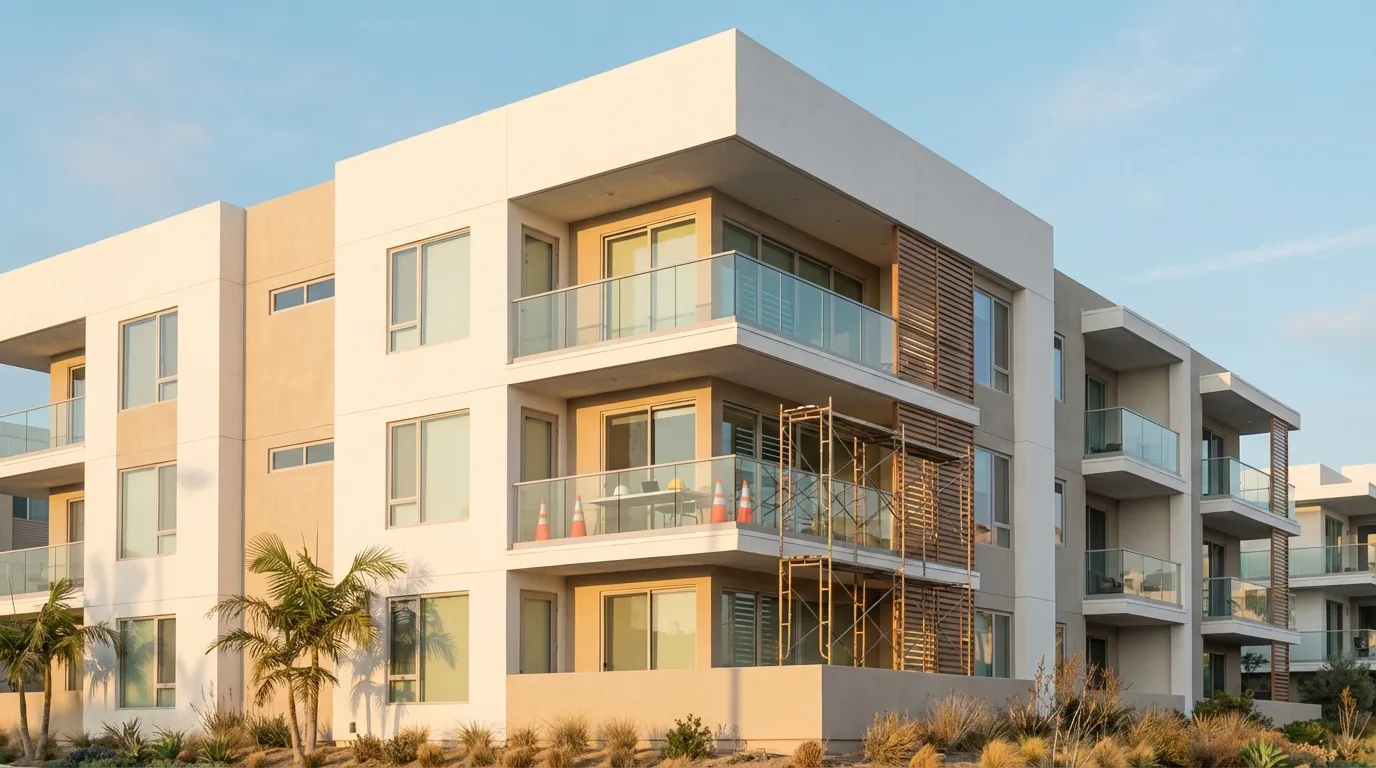
California's SB 326 requires condo balcony inspections every 9 years. The first deadline passed January 1, 2025. One inspection contractor says 80% of the balconies his firm inspects need repair. Some associations have levied special assessments of $20,000 to $60,000 per household, and one HOA attorney has seen one reach $175,000 per unit.
You're buying a condo in California. The HOA fees look reasonable. The reserve study shows decent funding. Then you learn the building hasn't completed its SB 326 balcony inspection. Or worse, it has, and the results are bad.
Across the state, condo associations are discovering that balconies, walkways, and stairways have been deteriorating out of sight for years. One Orange County inspector told Mortgage Grader that his firm does 50 balcony inspections a month and 80% of them need some repair, at $10,000 to $25,000 per balcony. One California HOA law firm reports special assessments of $20,000 to $60,000 per household at associations that put off maintenance. One California HOA attorney has seen assessments as high as $175,000 per unit.
If you're buying a California condo, SB 326 compliance is no longer optional due diligence. It's the difference between a sound investment and a six-figure surprise.
What Is SB 326?
SB 326 requires California condos to inspect balconies and exterior walkways every 9 years. The first deadline was January 1, 2025.
SB 326, codified as California Civil Code Section 5551, was signed into law in 2019. It requires condominium associations with buildings of three or more attached multifamily units to inspect all exterior elevated elements (EEEs): balconies, decks, stairways, walkways, and railings that extend beyond the building's exterior walls, sit more than six feet above ground, and are supported in whole or in substantial part by wood or wood-based products. It covers the elements the association maintains, not ones an individual owner is responsible for. Buildings whose permit application was filed in 2020 or later follow a different clock: their first inspection is due within six years of the certificate of occupancy.
The law exists because of the 2015 Berkeley balcony collapse. On June 16, 2015, a fifth-floor balcony at the Library Gardens apartment building collapsed during a birthday party, killing six people and injuring seven others. The building was only eight years old. Investigators found the wooden joists had failed from dry rot caused by improper construction (Wikipedia).
Under SB 326, inspections must be performed by a licensed structural engineer, architect, or civil engineer (civil engineers were added by AB 2114 in July 2024). The inspector must use a statistically significant sample providing 95% confidence with a margin of error no greater than 5%. If an immediate safety threat is found, the HOA must block occupant access, and the inspector must report to local code enforcement within 15 days.
To check whether this applies to the unit you're looking at, ask the listing agent or the HOA whether the building has three or more attached units with wood-supported balconies, decks, or walkways more than six feet up. If it was permitted in 2020 or later, ask when the certificate of occupancy was issued, since the first inspection is due six years after that.
SB 326 vs SB 721: Condos vs Apartments
SB 326 covers condos. SB 721 covers apartments. The condo deadline already passed. The apartment deadline was extended to 2026.
California has two separate balcony inspection laws. SB 721 (2018) covers landlord-owned apartment buildings under Health & Safety Code Section 17973. SB 326 (2019) covers HOA-governed condominiums under Civil Code Section 5551. Many condo boards mistakenly believe that AB 2579, which extended SB 721's apartment deadline to January 1, 2026, also extended their deadline. It did not. HOAs that missed January 1, 2025 are currently noncompliant.
| SB 326 (Condos) | SB 721 (Apartments) | |
|---|---|---|
| First deadline | January 1, 2025 | January 1, 2026 (extended by AB 2579) |
| Inspection cycle | Every 9 years | Every 6 years |
| Who inspects | Licensed engineer or architect | Engineer, architect, qualified contractor, or certified building inspector |
| Sampling standard | 95% confidence, ≤5% margin of error | At least 15% of each element type |
| Statute | Civil Code 5551 | Health & Safety Code 17973 |
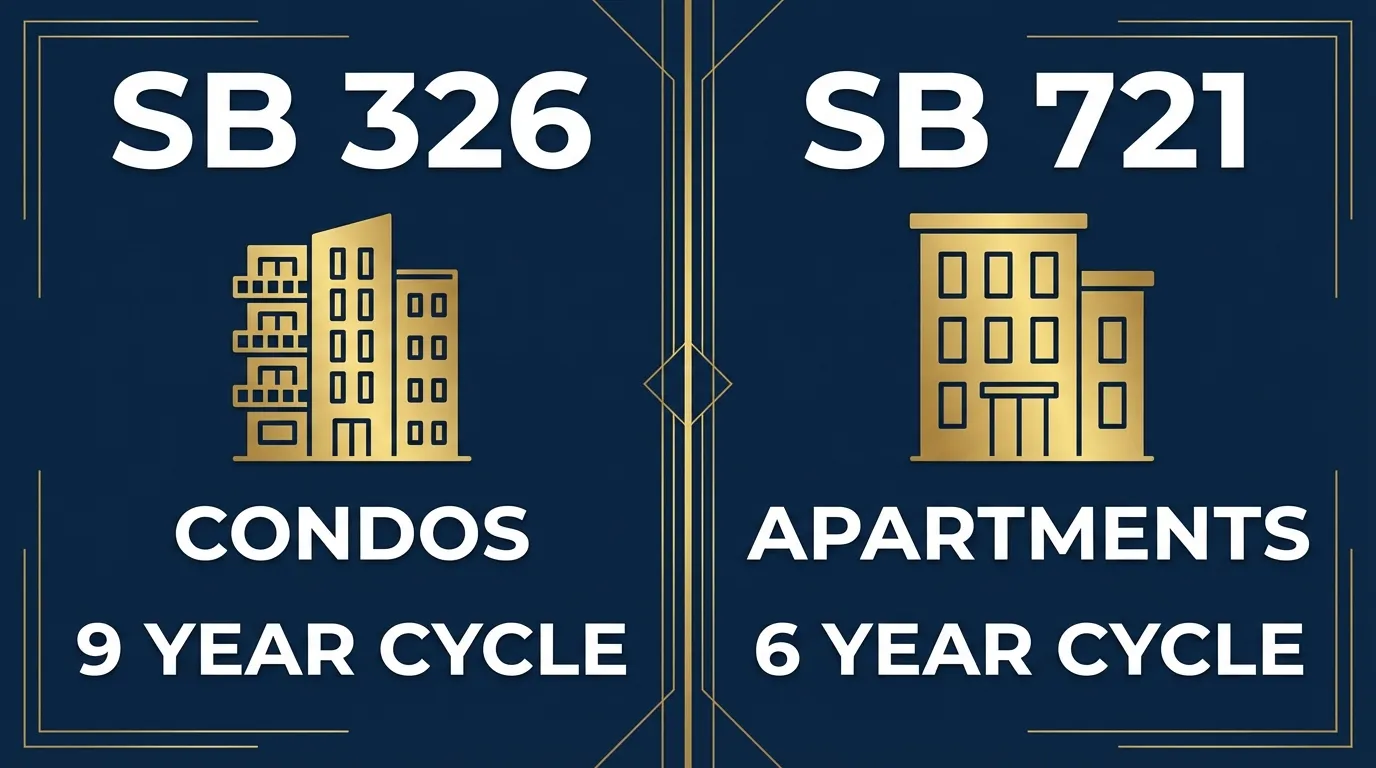
SB 326's sampling standard is more rigorous. Where SB 721 requires inspecting a flat 15% of each element type, SB 326 demands a statistically significant sample. In practice, this often means inspecting a larger percentage of balconies, especially in smaller buildings.
If the board points to the 2026 extension, or the building was once a rental, ask which law the inspection was done under. AB 2579 extended the apartment deadline only, so a condo inspection done to the SB 721 standard may not satisfy SB 326.
The Reserve Study Connection
SB 326 inspection results must be incorporated into the HOA's reserve study. If the reserve study predates the inspection, it may not reflect the repairs yet.
This is where SB 326 directly affects your purchase decision. Civil Code Section 5551(f) requires the stamped inspection report to be incorporated into the association's reserve study under Section 5550. That means repair costs identified during the SB 326 inspection become line items in the reserve funding plan.
If the HOA completed its inspection but hasn't updated the reserve study, the study may not yet reflect the inspection, so ask when it will be updated. If the HOA hasn't completed the inspection at all, the reserve study has a blind spot on structural condition. Either way, the percent funded ratio you see may not reflect reality.
Since January 1, 2026, SB 410 has added the most recent balcony inspection report to the documents a seller must give a buyer before a resale (Civil Code 4525(a)(11); a builder's first sale of a new unit is covered by different rules). Ask for it along with the rest of the disclosure packet, and read it before your contingencies run out.
Check Your Building's Financial Health
Upload your HOA's reserve study and get instant analysis of percent funded, deferred maintenance, and special assessment risk. Free. No signup required.
Your first full property report is also free. See what you'll get →
Or get your first full report free →What Happens When Problems Are Found
One inspection contractor says most balconies he sees need repair. Costs range from $10,000 per balcony for repairs to $175,000 per unit, the largest assessment one HOA attorney knew of.
The results coming back from SB 326 inspections are not encouraging. Alex Del Toro, president of The Termite Guy in Santa Ana, told Mortgage Grader that 80% of the balconies his firm inspects need some repair, and that a repair typically costs $10,000 to $25,000 per balcony. Where the association has to raise the money at once, one HOA law firm reports special assessments of $20,000 to $60,000 per household.
Jeff Beaumont, an HOA attorney at Beaumont Tashjian, told Mortgage Grader he has seen special assessments as high as $175,000 per unit. Beach cities are especially exposed because salt air speeds up corrosion: they “can have $100,000 special assessments,” he told Mortgage Grader in 2022.
Insurance is a separate pressure on condo budgets. HOA attorney Jeff Beaumont told Mortgage Grader that condo association insurance premiums have gone up by as much as 100% to 400% in recent years. He was talking about condo insurance generally and did not tie it to SB 326. Lenders are looking harder at balconies specifically: the condo questionnaire many lenders use asks when the building was last inspected and whether recommended repairs were done, and at least one lender has classified routine repair recommendations as "critical repairs", refusing to finance a pending sale. Before you write an offer, ask your lender whether it will finance a building whose balcony report recommends repairs, and ask the HOA for the inspection report and its answers on the lender questionnaire.
What Buyers Should Check Before Closing
Ask five questions about SB 326 compliance before writing an offer on any California condo.
These questions apply to any California condo with three or more units and wood-framed exterior elements. Don't assume the seller or listing agent will volunteer this information.
- Has the SB 326 inspection been completed? The deadline was January 1, 2025. If the HOA hasn't done it, they're noncompliant and you have no visibility into structural condition.
- What were the findings? Request the full stamped engineer or architect report. Since January 1, 2026, a reselling owner must include it in the disclosure documents (SB 410).
- Has the reserve study been updated to reflect SB 326 costs? Civil Code 5551(f) requires it. If the reserve study predates the inspection, it may not reflect the repairs yet, so ask when it will be updated.
- Are there any pending or planned special assessments? Repair costs from SB 326 findings often trigger assessments. Check whether one has been levied, is being planned, or could follow from the inspection report.
- What is the building's insurance status? Ask for the current master policy carrier, coverage amount, and recent premium history. Non-compliance or unresolved structural issues can lead to coverage gaps that affect loan eligibility.
If you're evaluating multiple properties, these five data points separate buildings that have addressed their structural obligations from those that are sitting on unknown risk. The SB 326 report, combined with an HOA document review, gives you the clearest picture of what you're actually buying into.
Frequently Asked Questions
What is the SB 326 compliance deadline?
The first inspection deadline was January 1, 2025. After the initial inspection, subsequent inspections are required every 9 years. AB 2579 extended the deadline for apartment buildings under SB 721, but it did not extend the SB 326 deadline for condominiums.
Does SB 326 apply to all California condos?
SB 326 applies to condominium associations with buildings of three or more attached multifamily dwelling units that have exterior elevated elements (balconies, decks, walkways, stairways) supported by wood or wood-based products and elevated more than six feet above ground. It covers the elements the association maintains. Balconies that are not supported in substantial part by wood fall outside it, so ask the HOA which elements its inspector included.
How much do SB 326 inspections cost?
It depends on the size of the building and how many balconies, decks, and walkways the inspector has to sample. One contractor puts inspection and report at $15,000 to $30,000 even for a small association of 4 to 10 units. Repairs are a separate bill: $10,000 to $25,000 per balcony by one inspector's estimate, and special assessments of $20,000 to $60,000 per household where the association has to raise the money at once. Ask the HOA what the inspection cost and whether repairs are already funded.
What happens if an HOA misses the SB 326 deadline?
No state agency enforces the deadline. HOA attorney Jeff Beaumont told Mortgage Grader that many communities are not compliant and “there is no regulatory agency overseeing” the law. Local code enforcement gets involved when an inspection finds an immediate safety threat. The practical consequences land on buyers: the condo questionnaire lenders use asks about the last inspection of the building, and a building without one may have trouble meeting lender financing requirements (Kriger & Schuber). Ask the HOA for the report before you remove your loan contingency.
Can I request the SB 326 inspection report as a buyer?
Yes, on a resale. Since January 1, 2026, SB 410 requires the seller to give you a copy of the most recent inspection report as part of the disclosure documents (Civil Code 4525(a)(11)). The stamped report must also be incorporated into the reserve study per Civil Code 5551(f).
Buying a California Condo? Check the Documents First.
Upload your HOA reserve study or CC&Rs for instant analysis. Built on insights from 1,900+ HOA documents analyzed.
Related Articles
Sources & References
- California Civil Code Section 5551 (SB 326 exterior elevated element inspection requirements)
- SB 326 Bill Text (2019-2020 Session) (original legislation adding Civil Code 5551 and 5986)
- SB 410 Bill Text (2025, Chapter 516) (inspection report added to the seller's disclosure documents, Civil Code 4525(a)(11), effective January 1, 2026)
- 2015 Berkeley balcony collapse - Wikipedia
- HOA Law Blog: AB 2114 Signed (civil engineers added to approved inspector pool, July 2024)
- Bay Cities Construction: AB 2579 Explained (AB 2579 extended SB 721 only, not SB 326)
- California Health & Safety Code Section 17973 (SB 721 apartment inspections: six-year cycle, 15% sample, inspector qualifications)
- AB 2579 Bill Text (2024, Chapter 835) (extended the SB 721 apartment deadline to January 1, 2026)
- AB 2114 Bill Text (2024, Chapter 100) (added licensed civil engineers as SB 326 inspectors)
- Weinstein Construction (inspection and report cost for a small association; $25,000 to replace a damaged balcony)
- MBK Chapman PC ($20K-$60K per household special assessments)
- Mortgage Grader: California's balcony law and Fannie Mae standards (Feb 2025) (Alex Del Toro: 80% of inspected balconies need repair, $10K-$25K per balcony; Jeff Beaumont: $175K per unit largest known assessment; condo association insurance costs generally up 100% to 400%)
- Kriger & Schuber (lender classification of SB 326 findings as critical repairs)
- Mortgage Grader: Condo Shoppers Beware (Mar 2022) (Jeff Beaumont: beach cities can have $100,000 special assessments)
Disclaimer: This article is for educational purposes only and does not constitute legal, financial, or real estate advice. SB 326 requirements and enforcement may vary by jurisdiction. Consult a qualified real estate attorney or structural engineer for guidance specific to your situation. GoverningDocs is not affiliated with the California Legislature or any state agency.