Yes, an HOA can change rental rules after you buy. CC&Rs are living documents that can be amended by a supermajority vote. But Florida and California now have grandfathering laws that protect existing owners from retroactive rental bans. Check your CC&Rs and your state's statutes before closing.
You closed on a condo planning to rent it out. Maybe it's an investment property. Maybe you're relocating and want to hold onto the unit. Six months later, the HOA board announces a vote to ban rentals entirely.
Can they do that? Legally, in most states, yes. CC&Rs are equitable servitudes. When you bought the property, you agreed to the existing rules and the amendment process that can change them. That amendment process is how rental bans get added after the fact.
The good news: some states have caught up. Florida and California now have statutes that grandfather existing owners when rental restrictions are tightened. But those protections have limits. And in states without grandfathering laws, you have very little recourse. This post covers what the law actually says, which states protect you, and what to look for in CC&Rs before you buy.
Can Your HOA Actually Change Rental Rules After You Buy?
Yes. CC&Rs can be amended to add rental restrictions, and courts have consistently upheld retroactive rental bans as valid exercises of HOA authority.
CC&Rs run with the land. They bind every owner, current and future. And nearly every set of CC&Rs includes an amendment provision that allows the community to change the rules by supermajority vote. That includes adding rental restrictions where none existed before.
Courts have tested this extensively. In Woodside Village Condominium Association v. Jahren (Florida Supreme Court, 2002), the court held that a retroactive rental ban was enforceable against an existing owner who had been renting her unit for years. The court found that CC&R amendments carry a presumption of validity as long as they are not arbitrary, against public policy, or imposed in bad faith.
California reached a similar conclusion in Villa De Las Palmas Homeowners Association v. Terifaj (California Supreme Court, 2004). The court upheld a retroactive pet restriction, establishing the principle that CC&R amendments are enforceable against existing owners even if the restriction did not exist when they purchased.
The pattern is clear. Unless your state has a specific statute saying otherwise, an HOA can change rental rules after you buy through the amendment process. The question is whether your state has enacted protections since these rulings.
Which States Protect Existing Owners?
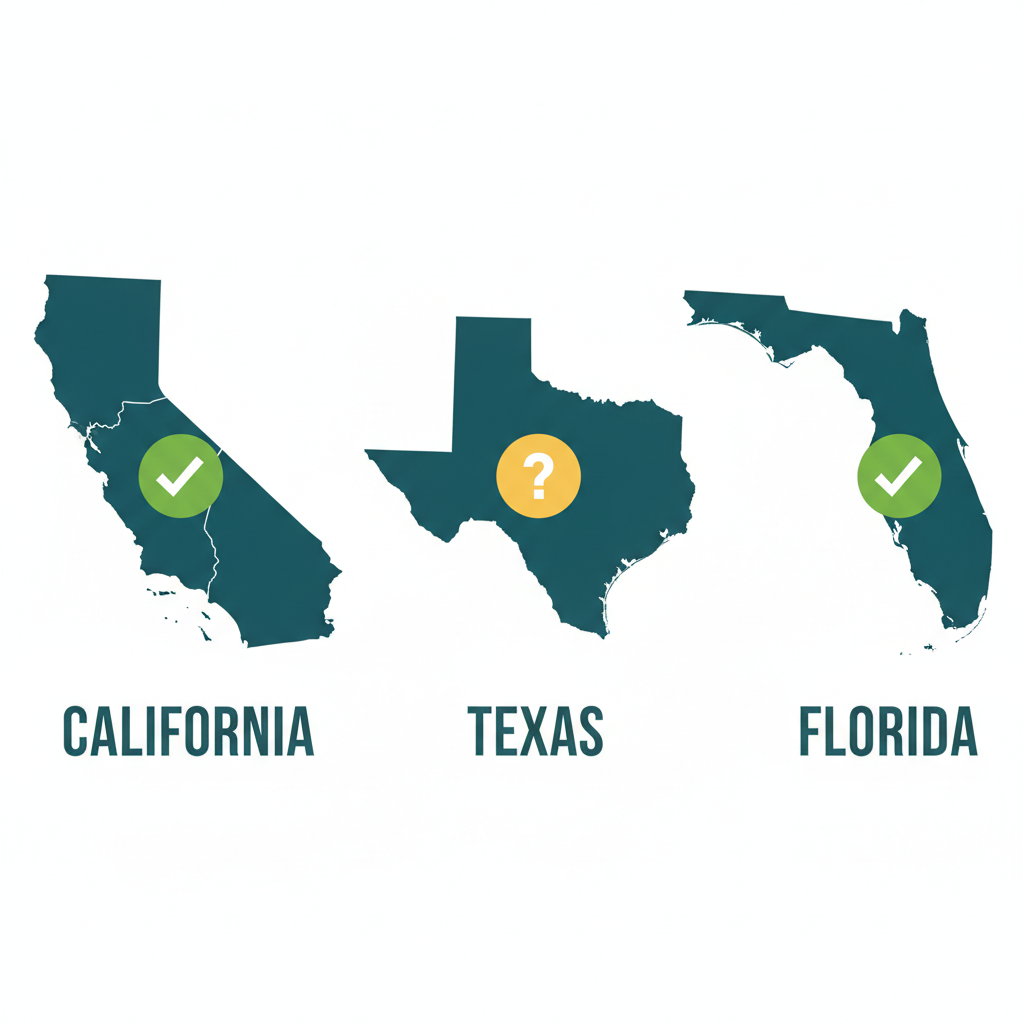
Florida and California have grandfathering statutes. Texas has no specific statute, but courts have applied equity defenses on a case-by-case basis.
| State | Grandfathering Statute | What It Covers | Key Exceptions |
|---|---|---|---|
| Florida (Condos) | Fla. Stat. § 718.110(13) | Rental amendments only apply to owners who voted for the amendment or bought after it was recorded | None for condos |
| Florida (HOAs) | Fla. Stat. § 720.306(1)(h) | Same protection for HOAs with more than 15 parcels (effective July 2021) | Short-term bans (<6 months) and frequency caps (3x/year) apply to ALL owners |
| California | Cal. Civ. Code § 4740, § 4741 | Owners exempt from rental prohibitions adopted after purchase. HOAs cannot ban all rentals (25% rental cap floor). | Short-term rental bans (<30 days) still allowed for all owners |
| Texas | No specific statute | Case-by-case. Courts may interpret covenant ambiguities in owner's favor. | No guaranteed protection. See Zgabay v. NBRC for covenant interpretation example. |
Florida's condo protection (Section 718.110(13)) was enacted in 2004, directly in response to cases like Woodside Village v. Jahren. The HOA version (Section 720.306(1)(h)) followed in 2021 and covers communities with more than 15 parcels. But pay attention to the exceptions: even in Florida, an HOA can still ban short-term rentals (leases under six months) and limit rental frequency to three times per year for all owners, including those who owned before the amendment.
California's Civil Code 4740 grandfathers existing owners from rental bans adopted after their purchase date. Section 4741 goes further by setting a floor: HOAs cannot cap rentals below 25% of units. The California Court of Appeal reinforced this in Brown v. Montage at Mission Hills (2021), holding that grandfathering protections do apply to existing owners.
In Texas, there is no specific grandfathering statute. In Zgabay v. NBRC Property Owners Association (Texas Court of Appeals, 2015), the court ruled in favor of the property owner after finding that the HOA's restrictive covenants were ambiguous regarding rental duration. But this is not a reliable protection. Texas owners challenging retroactive rental bans must argue covenant interpretation on a case-by-case basis with no guarantee of success.
How CC&R Amendments Work (and What Vote It Takes)
Most CC&R amendments require a 67-75% supermajority vote of all owners and must be recorded with the county to take effect.
CC&R amendments are not casual. The process typically requires:
- Supermajority vote. Most CC&Rs require 67% (two-thirds) or 75% of all owners to approve an amendment. Some require an even higher threshold for specific types of changes. This is a vote of all owners, not just those who show up to the meeting.
- Written notice. Owners must receive advance notice of the proposed amendment and the vote. State law typically sets minimum notice periods (often 10-30 days).
- Recording. The amendment must be recorded with the county recorder's office to be enforceable. An unrecorded amendment is not binding on future buyers.
- Lender approval. Some CC&Rs require mortgage lender consent for amendments. This is more common in newer developments where the developer's lender retained approval rights.
The amendment threshold is one of the most important things to check in CC&Rs if you plan to rent. A 67% threshold in a 200-unit building means 134 owners need to vote yes. That is a high bar. A 51% threshold in a 10-unit building means 6 owners can change the rules. Very different risk profiles.
Also check the amendment history. If the CC&Rs have been amended recently, look at what changed. If rental amendments have been proposed and failed, that tells you there is active interest in restricting rentals even if the votes are not there yet.
5 Rental Restrictions Hiding in CC&Rs
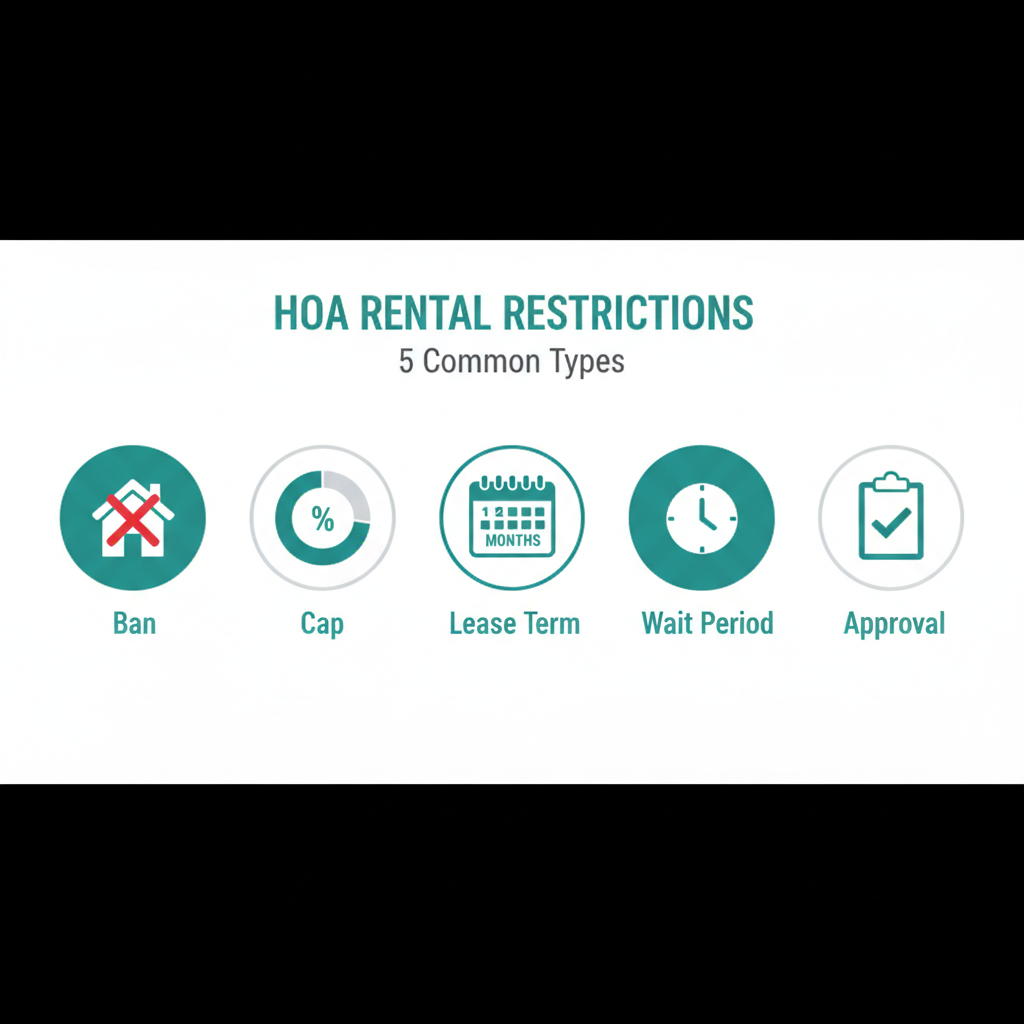
Rental restrictions go well beyond outright bans. Percentage caps, minimum lease terms, waiting periods, and lease approval requirements can all limit your ability to rent.
Not all rental restrictions are obvious. Some CC&Rs don't ban rentals outright but impose conditions that make renting impractical or expensive. Here are the five most common types we see when analyzing CC&Rs for rental restrictions:
1. Outright Rental Bans
The CC&Rs prohibit all rentals, period. Some include hardship exceptions (military deployment, job relocation) with board approval. Others do not.
2. Percentage Caps
Only a set percentage of units (often 20-30%) can be rented at any given time. If the cap is full, you go on a waitlist. These caps also affect condo financing because lenders check owner-occupancy ratios.
3. Minimum Lease Terms
The most common restriction. CC&Rs may require leases of at least 6 or 12 months. This effectively bans short-term rentals and Airbnb without technically banning all rentals. Even California's protective statute (Civil Code 4741) allows HOAs to ban leases under 30 days.
4. Waiting Periods and Frequency Caps
Some CC&Rs require you to own the unit for 1-2 years before renting it out. Others cap how many times you can rent per year. Florida specifically allows frequency caps of three rentals per year even for grandfathered owners (Section 720.306(1)(h)).
5. Lease Approval Requirements
The HOA must approve your tenant before the lease begins. This can include background checks, credit checks, and application fees ($100-500). Some associations use the approval process to effectively discourage rentals without formally banning them. Long approval timelines and vague rejection criteria create friction that makes landlords give up.
What to Check Before You Buy
Review current rental restrictions, the amendment threshold, amendment history, state grandfathering laws, and board meeting minutes for pending rental discussions before closing.
If you plan to rent your property now or in the future, these are the five things to verify during due diligence:
- Current rental restrictions. Read the CC&Rs cover to cover. Look for sections titled "Leasing," "Rental Restrictions," or "Use Restrictions." Don't skim. Restrictions sometimes appear in definitions sections or general use provisions rather than a dedicated rental section.
- Amendment threshold. Find the amendment provision and note the required vote percentage. Lower thresholds mean easier rule changes. In a small community with a 51% threshold, a handful of owner-occupants can ban rentals.
- Amendment history. Request copies of all recorded amendments. Check whether rental restrictions have been added, tightened, or proposed in the past. A pattern of rental-related amendments tells you the community is actively hostile to rentals.
- State grandfathering laws. Know your state's protections before you close. In Florida and California, existing owners have statutory protection. In most other states, you do not. Factor this into your risk assessment.
- Board meeting minutes. Request the last 12-24 months of board minutes. Look for any discussion of rental policies, proposed amendments, or complaints about renters. Board minutes reveal what's coming before it shows up in a formal amendment vote.
One more thing: check the owner-occupancy ratio. A building with 80% owner-occupants and growing frustration with renters is a building that will eventually try to restrict rentals. The demographic composition tells you which way the votes will go. Buildings with high investor ownership are less likely to pass rental bans because the voters themselves are landlords.
Frequently Asked Questions
Can an HOA retroactively ban rentals on a property I already own?
In most states, yes. CC&R amendments are enforceable against existing owners. Florida (Section 718.110(13) for condos, Section 720.306(1)(h) for HOAs) and California (Civil Code 4740) have grandfathering statutes that protect existing owners from rental bans adopted after their purchase date. In states without these statutes, courts generally uphold retroactive rental amendments.
Does grandfathering protection transfer if I sell?
No. Grandfathering protections are tied to the owner, not the property. In Florida and California, if you sell your unit, the buyer is subject to whatever rental restrictions are recorded at the time of their purchase. The grandfathering resets with each transfer. This is an important consideration if you plan to sell an investment property in a community that has since restricted rentals.
Can an HOA ban Airbnb and short-term rentals specifically?
Yes, and this is one area where even grandfathering states offer limited protection. Florida allows HOAs to ban leases under six months and cap rental frequency at three times per year for all owners, regardless of when they purchased. California allows HOAs to ban leases under 30 days (Civil Code 4741). Short-term rental bans have been upheld broadly across most states.
What percentage of owners need to vote to change CC&Rs?
Most CC&Rs require a supermajority vote of 67% to 75% of all owners to approve an amendment. This is a vote of all owners in the community, not just those present at a meeting. Some CC&Rs set different thresholds for different types of changes. Check your specific CC&Rs for the exact requirement. The amendment must also be recorded with the county to take effect.
How do rental restrictions affect property value?
It depends on the buyer pool. Rental bans can increase property values in owner-occupied communities by improving Fannie Mae and FHA eligibility (the 50% owner-occupancy threshold). But they reduce the buyer pool by eliminating investors. For properties in investor-heavy markets, a rental ban can significantly reduce demand and resale value. The financing angle cuts both ways. Read more about how HOA documents affect condo financing.
Check Your CC&Rs for Rental Restrictions Before You Close
Upload your CC&Rs for free analysis. See rental restrictions, amendment thresholds, lease approval requirements, and other red flags in minutes. No signup required. Based on our analysis of 1,900+ HOA documents.
Related Articles
Sources & References
- Florida Statute § 718.110(13) (Condo rental amendment grandfathering)
- Florida Statute § 720.306(1)(h) (HOA rental amendment grandfathering for 15+ parcels)
- California Civil Code § 4740 (Rental restriction applicability to existing owners)
- California Civil Code § 4741 (Rental cap floor and short-term rental restrictions)
- Woodside Village Condominium Association v. Jahren, 806 So. 2d 452 (Fla. 2002)
- Villa De Las Palmas Homeowners Association v. Terifaj, 33 Cal. 4th 73 (2004)
- Brown v. Montage at Mission Hills, Inc., 68 Cal. App. 5th 124 (2021)
Disclaimer: This article is for educational purposes only and does not constitute legal, financial, or real estate advice. HOA laws, CC&R amendment requirements, and grandfathering protections vary by state and community. Court precedents cited may not apply in all jurisdictions. Consult a qualified real estate attorney for guidance specific to your situation.